
.png)
Why Is My Hair Falling Out? Understanding Hair Loss and Thinning in Women
By Dr. Alyssa McPeak, DC, CFMP

Let's talk about something that can send even the most confident woman into a complete panic:
Hair loss.
Not the occasional strand that comes out in your hairbrush.
I'm talking about the handfuls in the shower.
The widening part.
The ponytail that suddenly feels half the size it used to.
The moment you catch a glimpse of your scalp in the mirror and think, "Wait... has it always looked like that?"
As women, we spend years trying to tame our hair, color our hair, straighten our hair, curl our hair, and sometimes wishing we had less of it.
Until one day, it's actually falling out.
Then suddenly we'd do just about anything to get it back.
Trust me, I get it.
I've been there. Multiple times.
I've experienced hair loss from postpartum hormone shifts, periods of overwhelming stress, and nutrient deficiencies. Each time, it was frustrating. Each time, it felt personal. And each time, I found myself asking the same question my patients ask me every day:
Why is this happening?
And that's exactly the question we should be asking.
Because hair loss isn't the problem.
It's a symptom.
Your body is waving a giant red flag and saying, "Hey! Something needs attention over here!"
The key isn't finding the newest shampoo, serum, oil, supplement, or social media trend.
The key is figuring out WHY your hair is falling out in the first place.
Your Hair Is Often the First Thing to Go
From your body's perspective, growing beautiful, thick hair is not a survival priority.
When your body is stressed, undernourished, inflamed, hormonally imbalanced, or struggling to keep up, it starts redirecting resources toward more important functions.
And unfortunately, your luscious locks get bumped down the priority list.
This is why hair loss is often one of the first signs that something deeper is going on.
The Top Causes of Hair Loss and Thinning in Women
Stress
Let's start with the big one.
Stress is one of the most common causes of hair loss that I see in practice.
And no, I'm not just talking about major life events.
I'm talking about:
Raising kids
Running businesses
Managing a household
Lack of sleep
Constant demands
Emotional stress
Mental overload
Being the default parent
In other words... the accumulation of life.
When stress hormones stay elevated, your body will push hair follicles into a resting phase. Several months later, your hair starts shedding and you're left wondering "what happened?"
Meanwhile your body is saying, "Remember that nervous breakdown three months ago? Yeah, this is from that."
Hormone Imbalances
Hormones have a huge impact on hair growth.
Issues such as:
PMOS
Postpartum hormone shifts
Perimenopause
Menopause
Estrogen dominance
Low progesterone
Elevated testosterone
can all contribute to hair thinning and increased shedding.
Hormones are often one of the first places I look when women come into the office struggling with hair loss.
Thyroid Dysfunction
Your thyroid is your body's thermostat.
When it isn't functioning properly, everything slows down.
Including hair growth.
Many women with thyroid dysfunction experience:
Hair thinning
Excessive shedding
Dry hair
Brittle hair
Slow regrowth
And unfortunately, many are told their thyroid is "normal" after only a TSH test.
At Roots, we believe your thyroid deserves more than a five-minute glance.

Medications
Certain medications can contribute to hair loss, including:
Birth control
Antidepressants
Weight loss medications
Blood pressure medications
Statins
If your hair started changing after a medication change, it's worth investigating.
Rapid Weight Loss
I know losing weight is often celebrated.
But your body doesn't always see it that way.
Significant weight loss, restrictive dieting, under-eating, and very low-calorie plans can create stress within the body and also deprive it of nutrients needed for healthy hair growth.
Hair loss is often one of the first signs that your body isn't getting what it needs.
Nutrient Deficiencies
This is a huge one.
Your body needs nutrients to make hair.
No nutrients. No building materials.
Some of the most common deficiencies associated with hair loss include:
Iron
Ferritin
Zinc
Vitamin D
Protein
B Vitamins
Magnesium
I can't tell you how many women have been told their labs are "fine" while their ferritin levels are barely scraping by and their hair is falling out.
Genetics
Yes, genetics can absolutely play a role in hair loss.
If your mother, grandmother, or other family members experienced thinning hair, you may have a genetic predisposition to hair loss. But here's the part most women are never told:
Your genetics are not your destiny.
Think of your genes like light switches. You may be born with certain switches, but whether those switches get turned on or stay off depends largely on the environment around them.
This concept is called epigenetics—the study of how lifestyle, nutrition, stress, hormones, toxins, inflammation, and overall health influence how your genes are expressed.
In other words, you may carry the genes associated with hair loss, but factors like chronic stress, hormone imbalances, nutrient deficiencies, thyroid dysfunction, blood sugar issues, and inflammation are often what flip those switches on.
The exciting part? By improving the environment within your body, you may be able to influence how those genes are expressed.
I've had many women walk into my office convinced their hair loss was simply "genetic" because that's what they had been told. While genetics may have contributed, we often uncover underlying issues that can be addressed and improved.
So if you've been told, "It's just genetics," don't stop there.
Genetics may load the gun, but your lifestyle and environment pull the trigger.
Top Nutrients for Hair Support
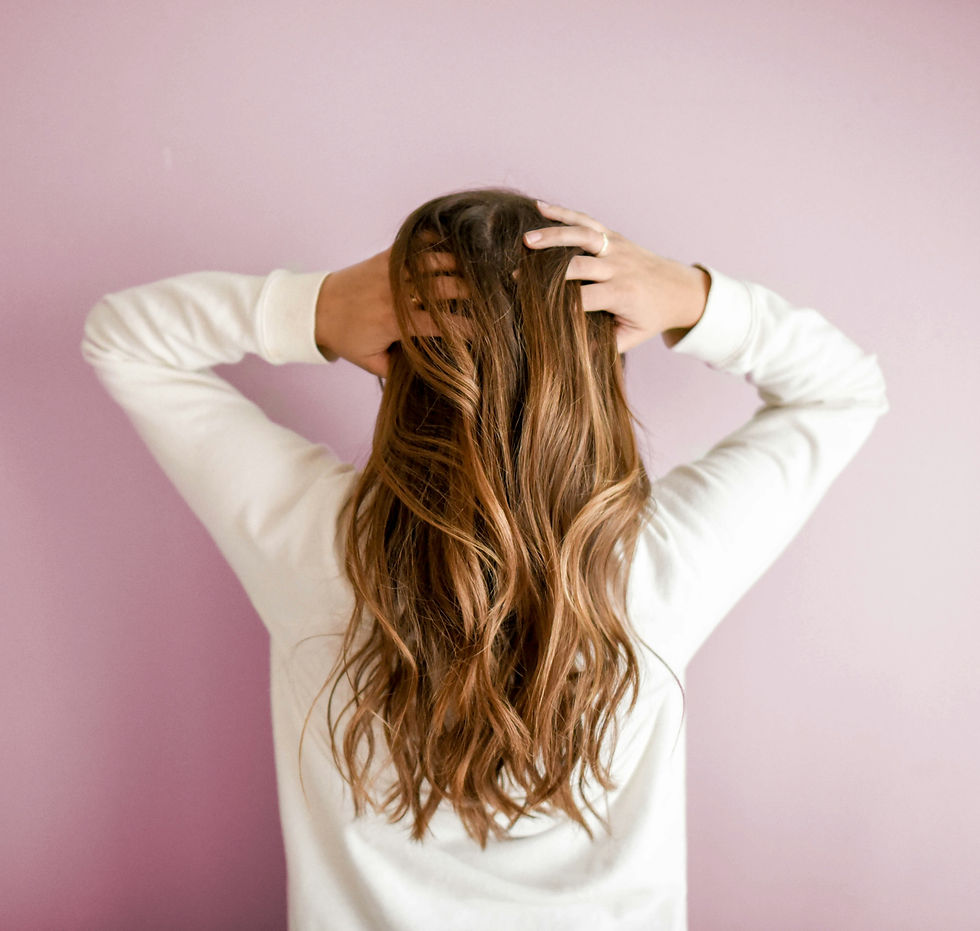
If you're trying to grow healthy hair, these nutrients matter.
Protein
Hair is made primarily of protein.
Translation?
If you're skipping protein at breakfast and surviving on cereal until lunch, your hair may not be thrilled about it.
Iron & Ferritin
Low iron stores are one of the biggest contributors to hair loss in women.
Zinc
Supports healthy hair follicles and growth cycles.
Vitamin D
Important for hair follicle function and immune health.
B Vitamins (methylated)
Support energy production and healthy cell growth.
Omega-3 Fatty Acids
Help reduce inflammation and support scalp health.
Collagen & Amino Acids
Provide the raw materials needed to build stronger hair.
What Can You Do At Home?
While we work on finding the root cause, there are several things you can start doing today:
Prioritize protein at every meal
Balance blood sugar - less sugar and starch
Manage chronic stress
Prioritize your sleep
Stay hydrated...with water
Avoid crash dieting or quick fixes
Address nutrient deficiencies
Support gut health
Give your scalp some love - massage, rosemary oil, red light therapy
And please stop buying every miracle hair product that shows up on Instagram.
If a serum could fix nutrient deficiencies and hormone imbalances, my job would be much easier.
The Root Cause Matters
This is where functional medicine shines.
Because while conventional approaches often focus on the symptom, we focus on the WHY.
Why are your hormones imbalanced?
Why is your thyroid struggling?
Why are your nutrient levels depleted?
Why is your body not recovering from stress?
Why did your hair start falling out in the first place?
When we answer those questions, that's when healing begins.
You Don't Have to Accept Hair Loss as Your New Normal
If you're struggling with hair loss or thinning, please know this:
You are not over-emotional.
You are not overreacting.
And you are definitely not alone.
Hair loss can affect confidence, self-esteem, and how you feel every time you look in the mirror.
I've been there myself, and it's one of the reasons I'm so passionate about helping women uncover the root cause of their hair loss.
Because when we identify what's driving the problem and give your body the support it needs, healthy hair growth can often return.
Ready to Dig Deeper?
At Roots Wholistic Health, we take a functional medicine approach to hair loss by looking at the whole picture.
We evaluate:
Hormones
Thyroid function
Stress and cortisol
Nutrient deficiencies
Gut health
Blood sugar balance
Inflammation
Because hair loss is rarely "just a hair problem."
If you're tired of being told everything looks normal while your hair continues to thin, we're here to help.
Schedule a Functional Medicine Consultation with Dr. Alyssa McPeak and let's uncover the root cause together.
Because you deserve answers, and your hair deserves a chance to grow back.


Comments